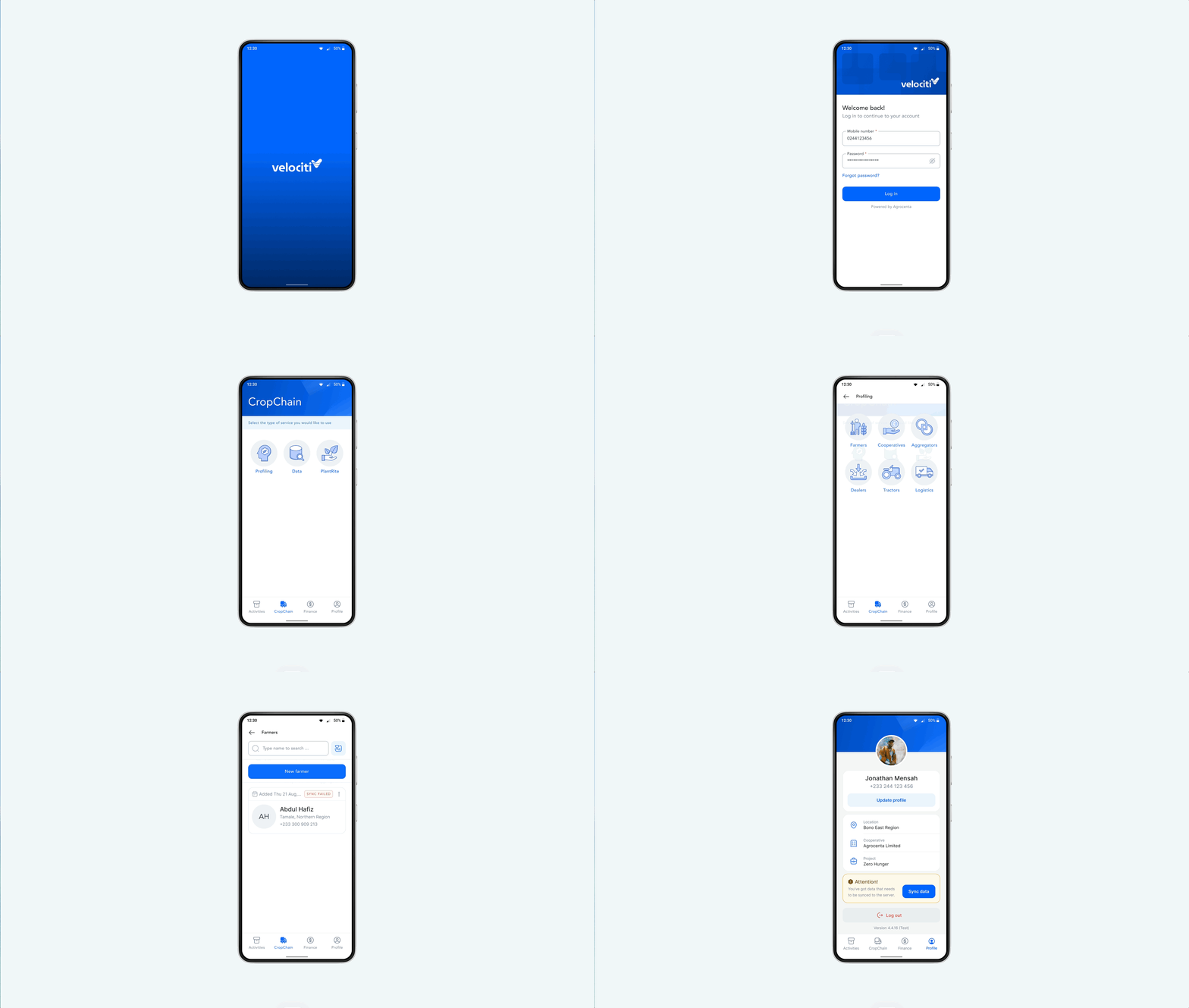
Velociti Mobile - Collecting Reliable Data Where Connectivity Fails
- Client
- AgroCenta Inc.
- Role
- UX/UI Designer
- Team size
- 3 members
- Duration
- Mar 2023 - Mar 2024
Velociti Mobile helped profile over 645,000 farmers across Northern and Eastern Ghana, onboard 320 cooperatives and support access to loans, savings and other financial services for farmers who previously had little to no formal financial records.
Understanding the Field
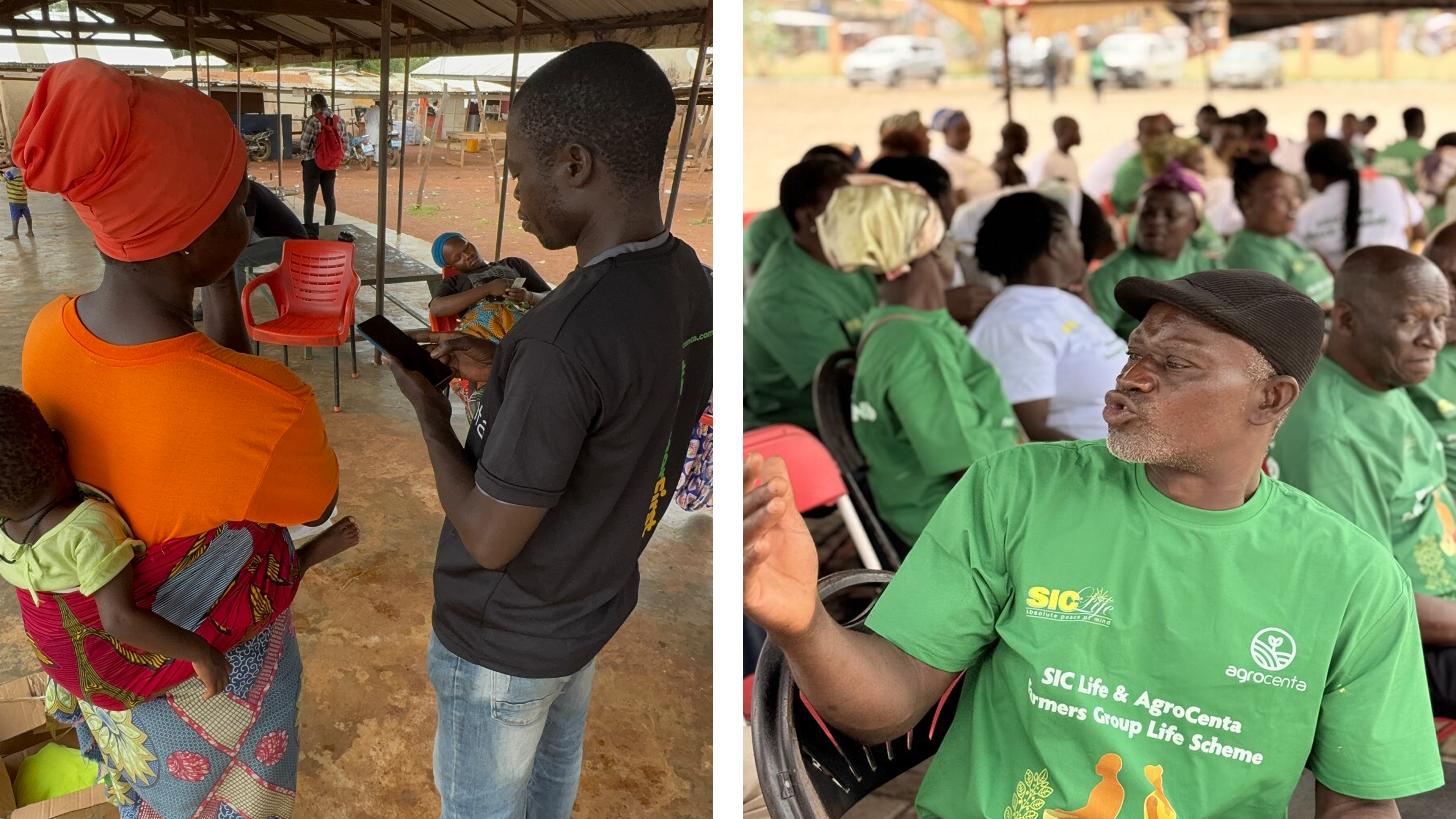
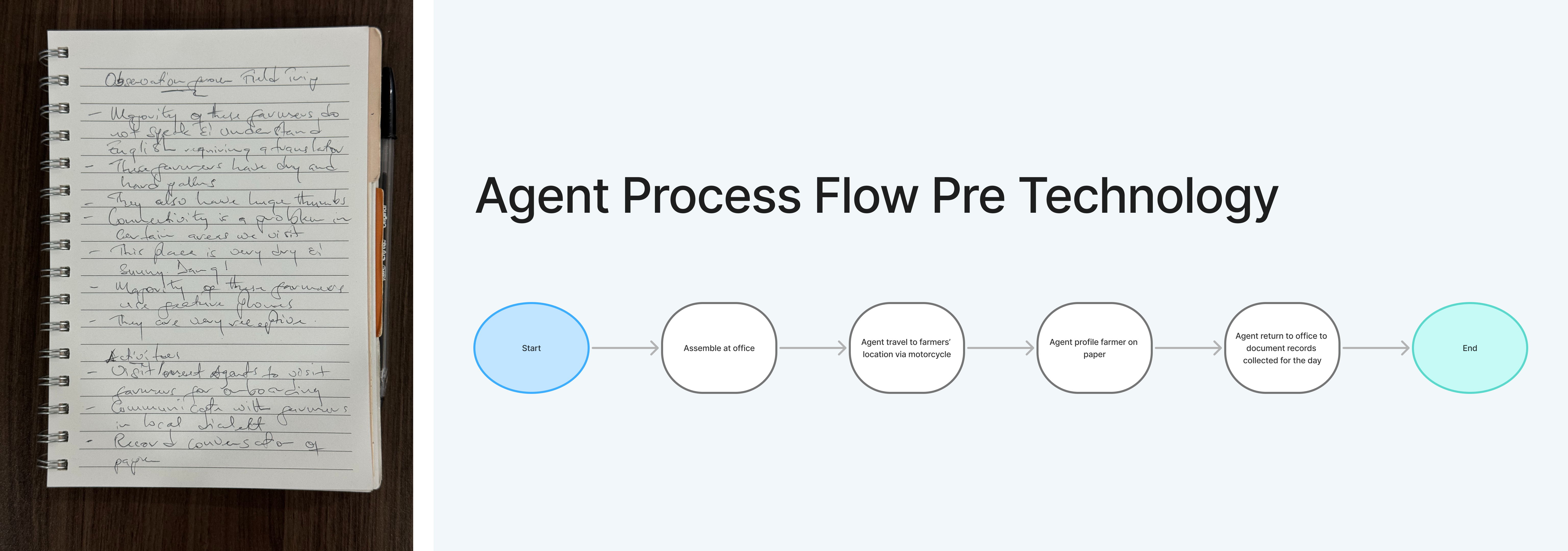
Instead of relying only on interviews, we spent time observing how agents profiled farmers in real field conditions across Northern Ghana. The goal was to understand how profiling worked day-to-day, where interruptions happened and how connectivity affected the experience in the field.
Alongside field observation, we had direct conversations with agents during live profiling sessions. This helped the team uncover operational constraints that would have been difficult to spot from office discussions alone.
When Connectivity Could Disappear Midway
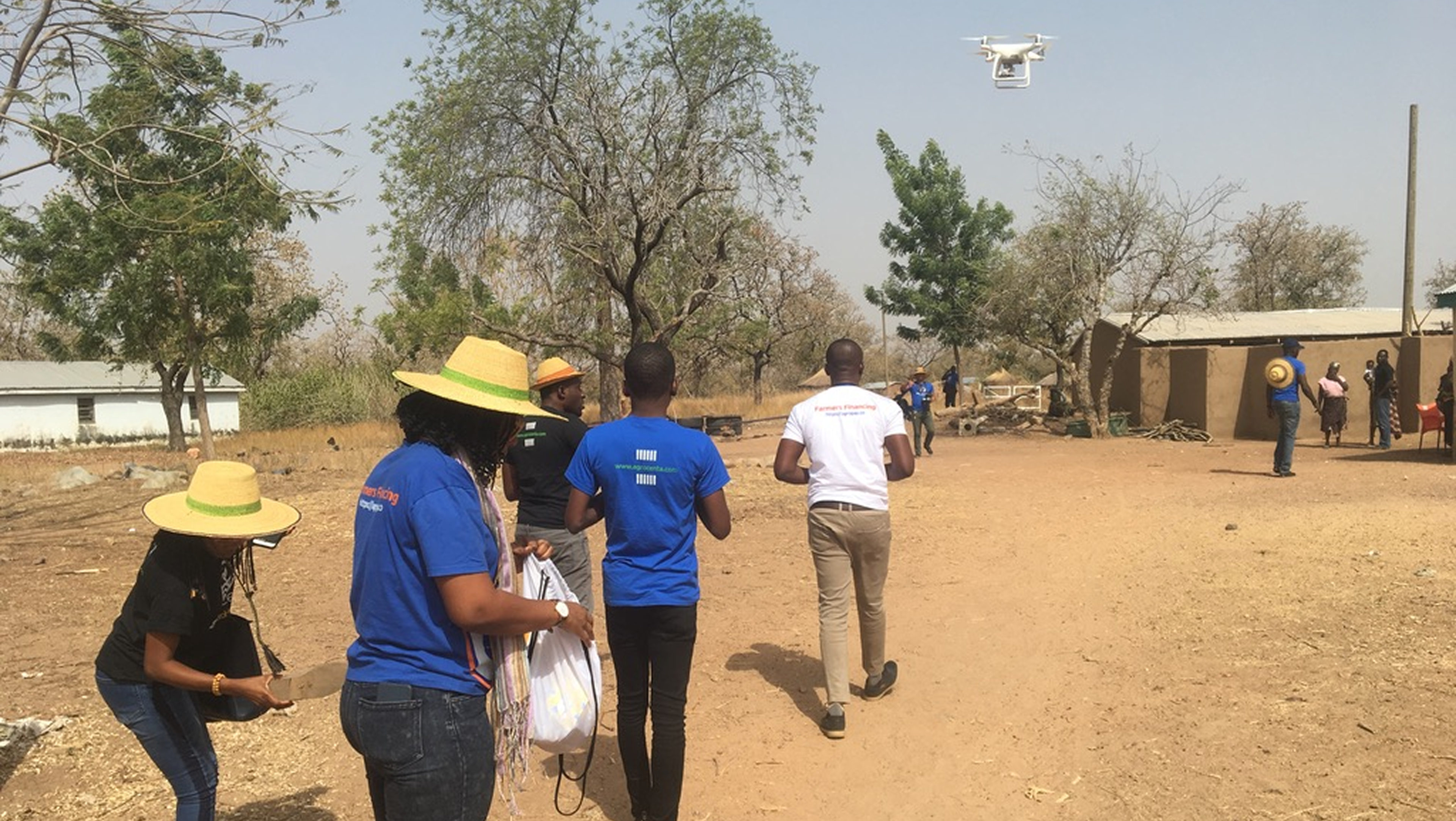
Most farmers could not onboard themselves. Many had limited literacy, used feature phones and lived in areas with unstable connectivity. In some communities, agents had to cross by ferry just to reach farmers.
AgroCenta relied on field agents to profile farmers using smartphones, often in places where internet access could disappear midway through registration. The product needed to work reliably offline without risking data loss.
What Changed After Leaving the Office
Field research quickly exposed a few important problems:
- Agents struggled with small tap targets while working outdoors
- Connectivity dropped frequently, making real-time sync unreliable
- Farmers rarely had email addresses, so phone numbers became the primary identifier
- Agents travelled with daily profiling targets, making incomplete sessions expensive and frustrating
These insights shifted the product from simply being mobile-friendly to fully offline-first.
Designing for Long Days in the Field
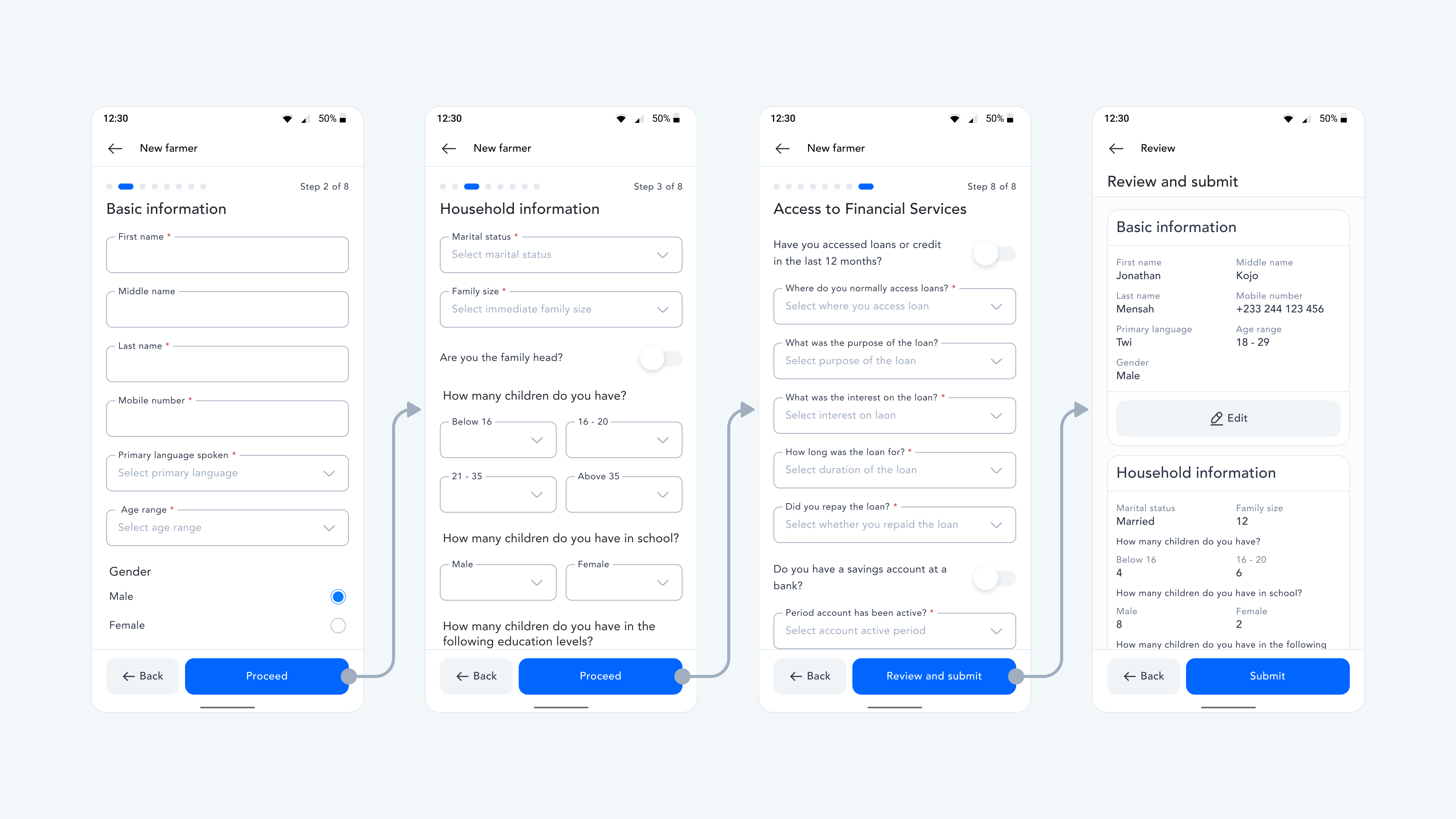
The profiling flow required a large amount of information, so I broke it into smaller steps instead of one long form.
Working closely with the PM and engineer, we introduced progressive saving at every step so agents could continue profiling even if the app closed, the battery died or connectivity disappeared midway through the process.
I also simplified data entry by reducing free-text inputs and replacing them with dropdowns, pickers and predefined options. Larger tap targets, card-based layouts and clearer progress indicators made the app easier to use in field conditions.
Helping Agents Know Their Work Was Safe
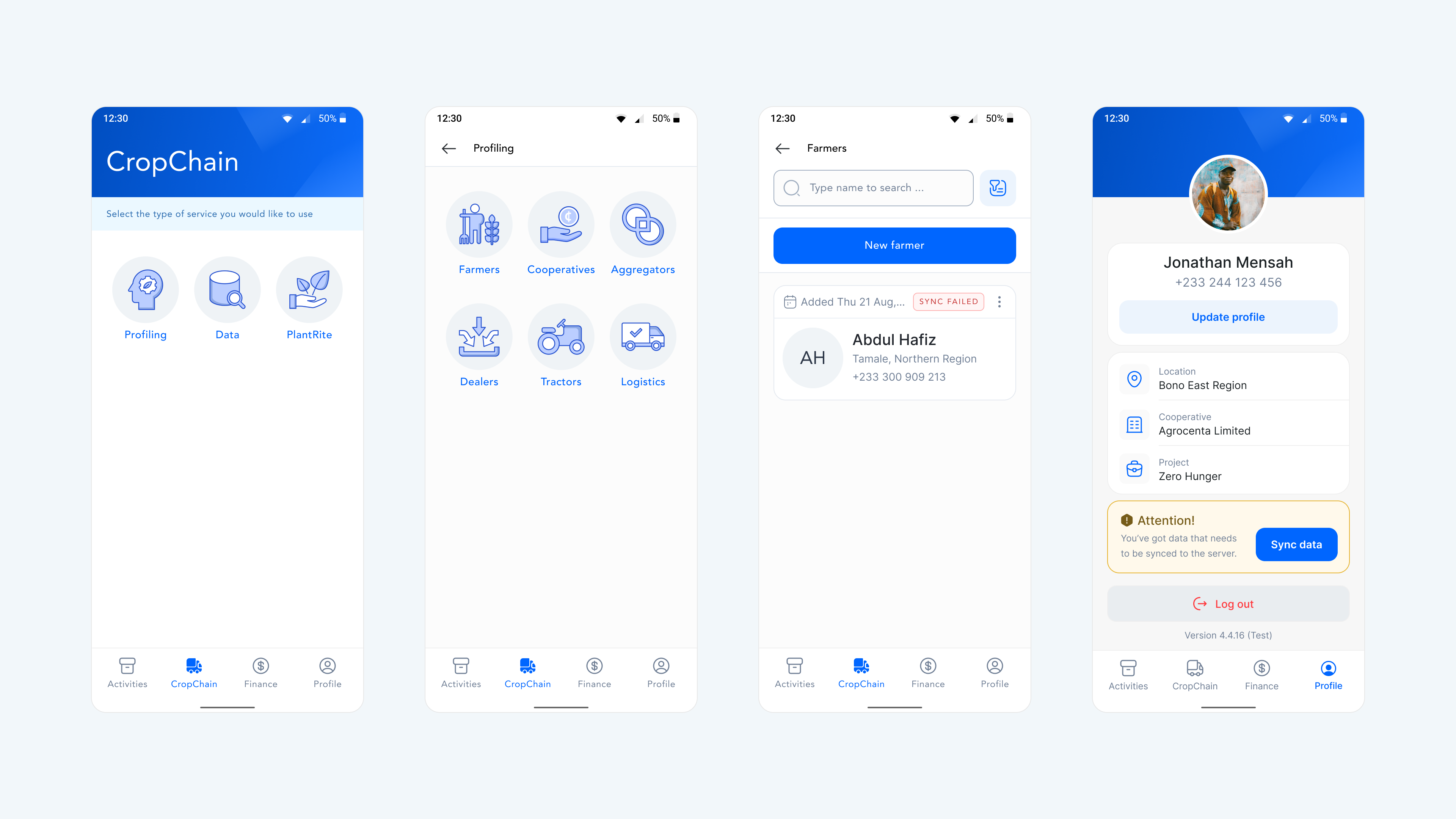
Agents often profiled 20–40 farmers offline before reconnecting to the internet later in the day. The challenge was helping them clearly understand what had synced, what failed and what still needed attention.
I designed a simple sync system using status indicators:
Green to signal success, orange for pending and red for failed sync.
Agents could retry failed records directly from the profile screen, while error messages were rewritten in plain language to make troubleshooting easier.
The Final Experience
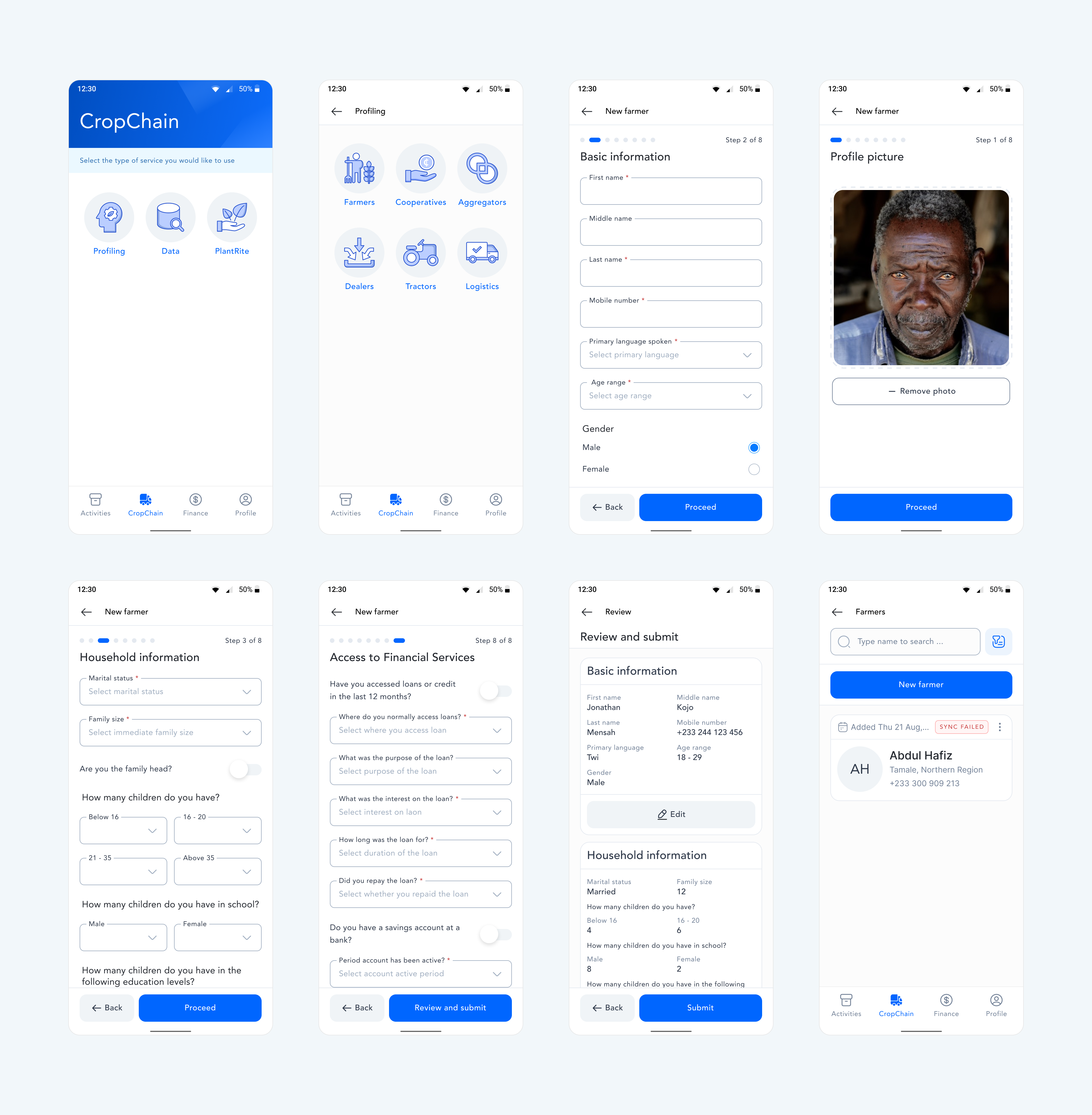
The team shipped an offline-first profiling system that allowed agents to collect and manage farmer data reliably in remote communities.
Beyond improving profiling operations, the project helped bring thousands of financially excluded farmers into a formal financial ecosystem.
Lessons from the Field
This project taught me that designing for underserved users is less about simplifying products and more about designing for real-world conditions.
The biggest insights came from field research. Watching agents struggle with poor signal, interruptions and physical interaction challenges revealed problems we would never have uncovered in meeting rooms.
Feedback from Michael K. Ocansey (CTO & Co-founder) AgroCenta Inc.
"Worked with Michael for several years and continue to go back to him for UI/UX work. He is timely and churns out modern designs with the flows well thought out"