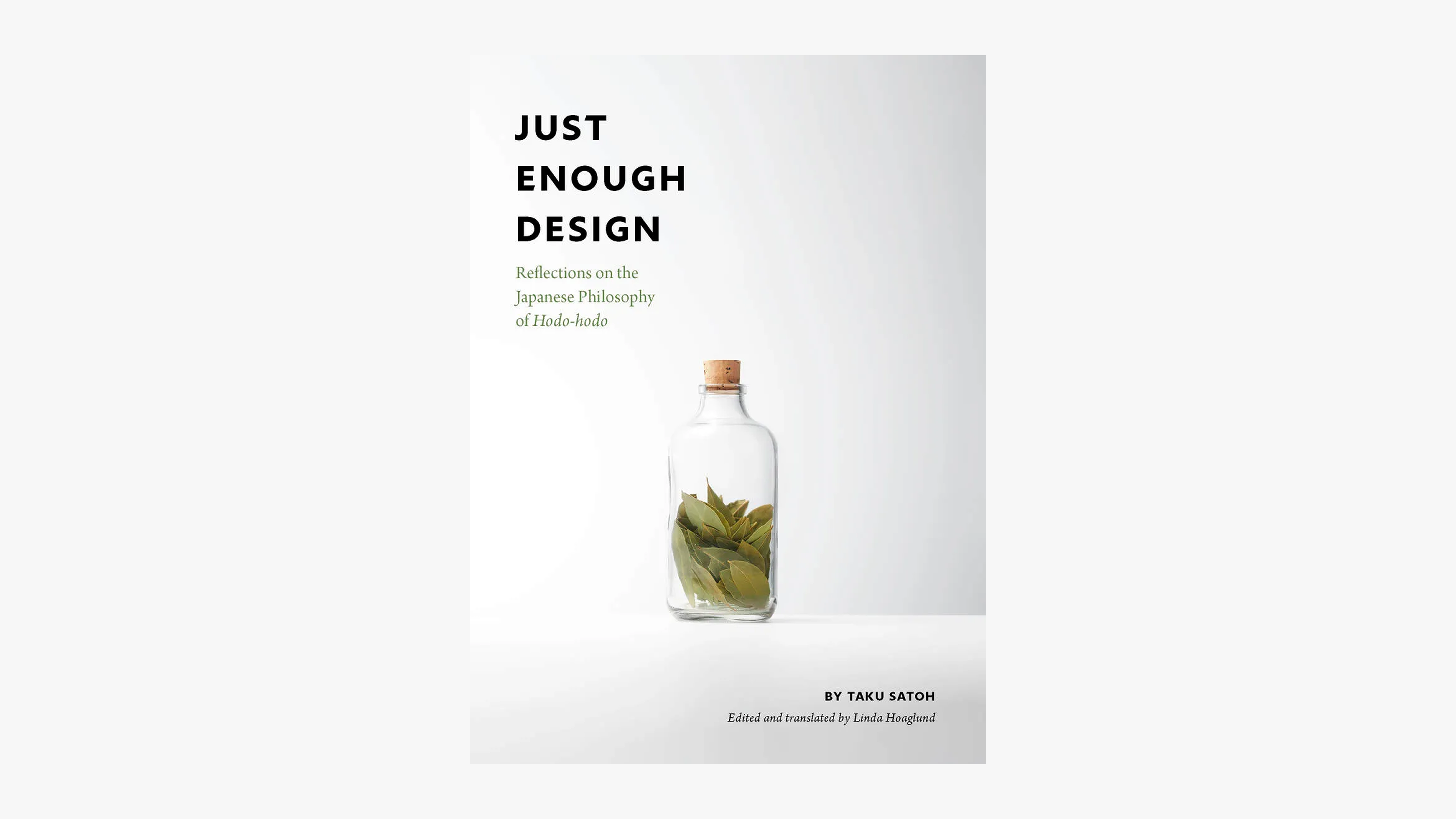
Notes from Just Enough Design by Taku Satoh
I’ve been a sucker for Japanese design for the longest time. I get obsessed with its calm, minimalistic feel so when I came across Just Enough Design by Taku Satoh, I couldn’t help but jump on it.
And honestly, it exceeded my expectations in ways I can’t fully put into words but I’ll try anyway.
As a designer, I was genuinely impressed by how Taku broke down his design process. With over two decades of experience designing for major brands like ISSEY MIYAKE, Max Factor (makeup line) and Kyoto University of Art & Design, among others, this level of clarity didn’t feel accidental but earned.
A few things that stood out:
Designing for Repurpose
The opening chapters highlighted how the Japanese repurpose basic household items such as clothes: showing how they transition from being sewn, to worn and eventually ending up in the soil as fertiliser. There’s also the Japanese hashi (chopsticks). This tool is intentional by design. It doesn’t tell you how it should be used so its usage ranges from picking grains of rice to tearing meat apart and so on.
Then there’s furoshiki , a square piece of fabric used to wrap and carry just about anything. This mindset of repurpose and multipurpose thinking inspired Taku to design a whisky bottle that serves as a storage container after consumption and a vinegar bottle that doubles as a flower vase.
On the surface, these are just bottles. What stood out was the thought behind them, from material selection to packaging. It got me thinking: what if the majority of our daily-use products were repurposed by design? The time saved in decision-making. The space to be regained from owning fewer, more thoughtful items. More room for movement and living.
End-to-end Experience
This book opened my eyes to a new way of thinking about a product’s entire lifecycle. Taku painted a clear picture of the full user experience, from product purchase, to use, to disposal.
Sometimes, as designers, especially contractors or freelancers we barely think about the full lifecycle of what we design. Our job is to put together screens, run user tests and dip. But in the real world, products and services leave lasting impressions on people throughout the entire journey. He refers to this as designing for the senses .
Design is Connection
Taku helped me understand that design goes beyond mere mockups, products or even services. His definition of design is simple: connecting people and things. Think about it, even the most basic objects serve a purpose, creating a connection between people and things or things and other things. By that definition, everything is designed even the things we don’t consciously label as such.
He then made a point that hit hard: not everything needs to be redesigned.
This resonated deeply with me because I’ve battled this firsthand during a couple of redesign gigs I’ve worked on. Around the same time I was reading this book, I listened to an NN/g UX Podcast episode with Jay Dutta, Global Head of UX at Deutsche Bank, where he referenced something his former manager told him, here “What’s the point of polishing things which are already shining?”
Sometimes, as designers, we go to extremes to prove our worth, doing too much and ending up causing chaos. If you’re redesigning a product and a flow or screen already solves the problem, why redesign it? In fact, you should find the previous designer and split the earnings with them because your workload just got lighter.
Design Doesn’t Need to Look Cool
Things don’t need to look fashionable or trendy to be designed. Design exists in everyday objects we interact with constantly. Once you start thinking about design beyond layouts, colours and fonts, you won’t see design the same way again.
Thoughtfulness and Consequence
Lastly, the thoughtfulness of design. Anticipating future consequences and designing (and living) with that awareness. In the age of AI, both consuming and designing for AI pose serious environmental concerns. Thinking through how AI is used in ways that protect the planet for future generations matters deeply and this responsibility isn’t limited to tech alone.
Overall, this is a good read. The biggest takeaway for me is learning to look beyond pixels and think more deeply about designing products that are multipurpose and contribute positively to the world long after we’re gone.